
Call protocol
Insurance claim call script for independent agencies
Short answer
When a client calls your agency to report a claim, a 100% AI receptionist takes the call, tells them it’s an AI and follows this insurance claim call script. It asks whether anyone is hurt, the name on the policy and a number to call back, what kind of loss it is, and when and where it happened. Then it sends that first report to the right agent at once and, if you’ve approved it, gives the client their carrier’s claims line. It never tells anyone whether something is covered.
It runs the same way at 2 p.m. and at 2 a.m.: after hours, on weekends and when your line is busy, the first report still gets taken. This is the protocol we start from for independent agencies; you adapt it and approve it before it answers.
Free setup · No contract · Cancel anytime
Example call: a fender bender in a parking lot
Summit Ridge Insurance · A fender bender in a parking lot
- AI
- Summit Ridge Insurance, AI Receptionist here, the agency’s AI assistant. How can I help?
- Caller
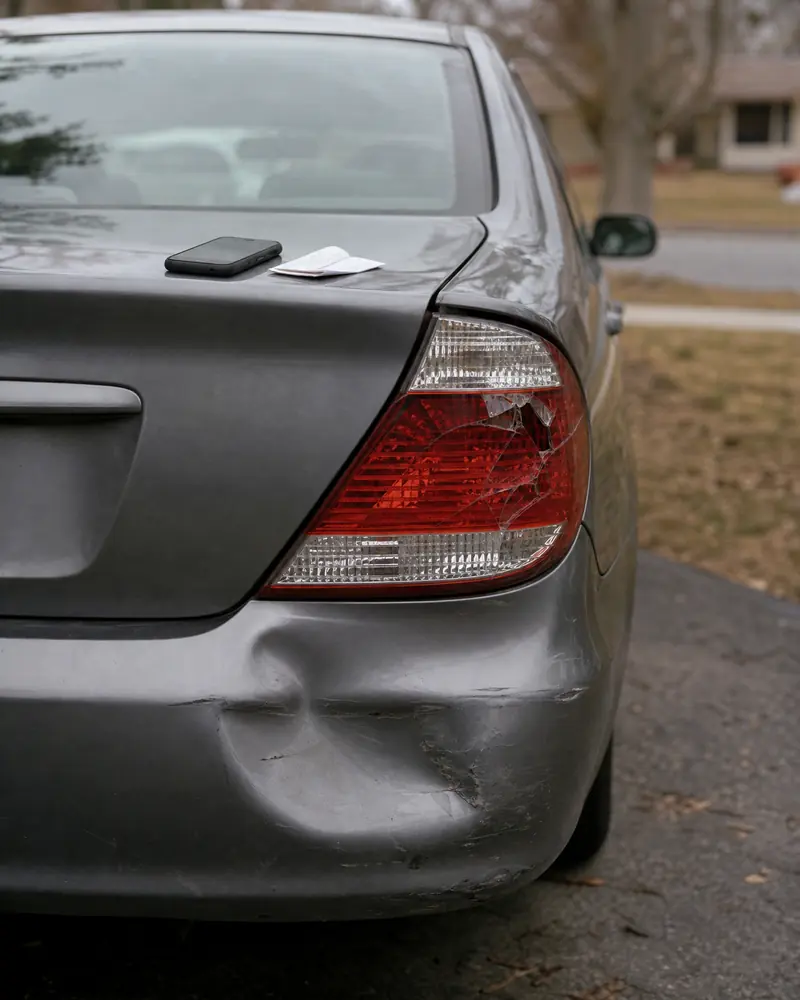
- Someone backed into my car. I need to report it.
- AI
- First, is anyone hurt?
- Caller
- No, just the bumper.
- AI
- The name on the policy, and a number to reach you?
- Caller
- Renata Vollmer, 555-0113.
- AI
- When and where did it happen?
- Caller
- Twenty minutes ago, at the grocery store lot.
- AI
- Thanks, Renata. I’ve sent this to your agent. Would you like your insurer’s claims line?
Summary sent to you
- Claim, auto
- another car backed into the insured’s bumper, grocery store lot, today. No injuries.
- Insured
- Renata Vollmer, 555-0113. Policy number to be confirmed.
- Done
- first notice of loss sent to her agent; carrier claims line offered. Coverage not discussed.
The script, step by step
-
Is anyone hurt?
Injuries or danger come before paperwork. If someone needs help now, the caller is told to hang up and call 911, and your agent is alerted.
The AI says: “First, is anyone hurt or in danger right now?”
-
Who is calling, and how to reach them
The insured’s name, the best number to call back, and the policy number if they have it handy. If not, the name and address are enough for your team to find it. A caller who isn’t your client is handled differently (see the table).
The AI says: “May I have the name on the policy, the best number to reach you, and the policy number if you have it?”
-
What kind of loss
Auto, home, business property, liability. Each one has its own few questions in your protocol: was another vehicle involved, is the home still livable, can the business open.
The AI says: “Is this about a car, your home, or your business?”
-
When, where and what happened
A short account in the caller’s words: date, place, what happened. It doesn’t ask who was at fault.
The AI says: “When and where did this happen, and what happened, in a few words?”
-
The carrier’s claims line
If you’ve approved it, it asks which company the policy is with and gives that carrier’s 24-hour claims number, so the client can file right away. If the caller doesn’t know, the agent follows up.
The AI says: “Which insurance company is your policy with? I can give you their claims line.”
-
Send the first report
This is the first notice of loss, in the caller’s own words. It goes to the client’s agent or your claims person by email at once. Serious losses, by your rules, are put through.
The AI says: “I’ve sent this to your agent. Your claim isn’t opened yet; your agent or your insurer will do that with you.”
Which calls go straight to an agent
For an agency, these are the hand-offs we start from. Your rules replace them.
| Situation | What happens |
|---|---|
| Injury or danger | 911 first, agent alerted at once |
| Home not livable after fire or flood | Put through to the agent on duty, or emailed at once |
| Business can’t open | Put through or emailed at once, by your rules |
| Auto accident, no injuries | First report emailed to the agent; carrier claims line given if approved |
| Someone who isn’t a client, reporting a loss involving one of your insureds | Name, number and what happened, as a message for the agent. Nothing about the policy or the insured is discussed |
| Small loss, or a question about a claim already filed | Message for the agent |
| New quote request | Taken as a lead, separate from claims |
What it never says on this call
- Whether the loss is covered, or what the deductible will be.
- That a claim has been opened. It takes the first report; your agent or the carrier opens the claim.
- Who was at fault, or what to say to the other driver or the police.
- How much the claim will pay, or how long it will take.
- Whether someone is your client, or anything about their policy, to a caller who isn’t the insured.
What you decide
- Which agent or claims person gets which client or line of business.
- What’s serious enough to put through instead of email.
- Carrier claims numbers: whether it gives them, and for which carriers.
- What clients hear about next steps.
- New business: how quote requests are handled, apart from claims.
- Spanish-speaking clients, answered in Spanish on the same line; see the Spanish-speaking caller protocol.
We set it up with you, and you approve it.
Why this protocol works
Our call protocols come from nearly two decades of running phone reception for small businesses. A claim call is the moment a client finds out whether their agency picks up. It asks what matters, injuries first, details next. It never promises what you don’t, so a client is never told "you’re covered" by anyone but you. More on our method. How night calls are sorted in general is on the after-hours triage protocol, and how a call is passed to an agent is on call transfer.
Questions agency owners ask
Does it file the claim with the carrier?
No. It takes the first notice of loss for your agency and, if you approve it, gives the client their carrier’s claims number so they can file directly. Your agent follows up with the full claim. Nothing is filed in anyone’s name without your team, and the caller is told so.
What if a client asks whether they’re covered?
It tells them their agent will review the details and get back to them. It doesn’t read policy terms, guess at deductibles or say whether a loss is covered. What it can say is what happens next: the first report is with their agent, who will contact them.
Can it handle calls from people who aren’t clients?
Yes, and it tells them apart. Someone asking for a quote is taken as a new lead. Someone reporting a loss that involves one of your insureds gets a message taken for the agent, with nothing said about the policy or the insured. Claims, leads and third-party messages arrive labeled.
What do I get after each claim call?
An email to the right agent at once with the insured’s name, a callback number, the type of loss, date, place and description, with the recording and transcript in your dashboard. Serious losses are marked Urgent. Every call also shows in your call list; messages that aren’t claims work like message taking.
Put this protocol on your agency’s line
Tell us who covers which clients, what counts as serious and which carrier numbers to give, and we build your claim protocol as part of your free setup. Nothing goes live until you approve it. No monthly fee on Pay As You Go; see pricing and the full call protocol library.
Free setup · No contract · Cancel anytime