
Legal
Personal injury answering service for the call after the accident
Short answer
A personal injury answering service takes the call that usually comes a day or two after the accident, often after the other side’s insurance company has already called. Ours is 100% AI, and says so before anything else. It takes the accident date and type, whether the caller got medical care, the other driver’s name for your conflict check and whether an insurer wants a statement, then alerts your attorney by your rules. It never puts a value on a case, and you get a summary of every call.
Free setup · No contract · Cancel anytime
Example call: an insurer asking for a statement
Haddad and Pruitt Injury Law · An insurer asking for a statement
Urgent
- AI
- Haddad and Pruitt Injury Law, this is AI Receptionist, the firm’s AI assistant. I can’t give legal advice. What happened?
- Caller
- I was rear-ended yesterday. I went to urgent care.
- AI
- Do you know the other driver’s name?
- Caller
- Dale Kirkpatrick. His insurer wants a recorded statement.
- AI
- Your name and number?
- Caller
- Carla Jennings, 555-0196.
- AI
- Thanks, Carla. I’m alerting an attorney now. That doesn’t mean the firm has taken your case.
Summary sent to you
- Urgent
- rear-end collision yesterday; caller treated at urgent care. The other driver’s insurer is asking for a recorded statement.
- Other driver
- Dale Kirkpatrick (for conflict check). **Caller:** Carla Jennings, 555-0196.
- Done
- email sent to the attorney on duty. No advice given about the statement; no fee terms discussed.
When personal injury calls come at the wrong time
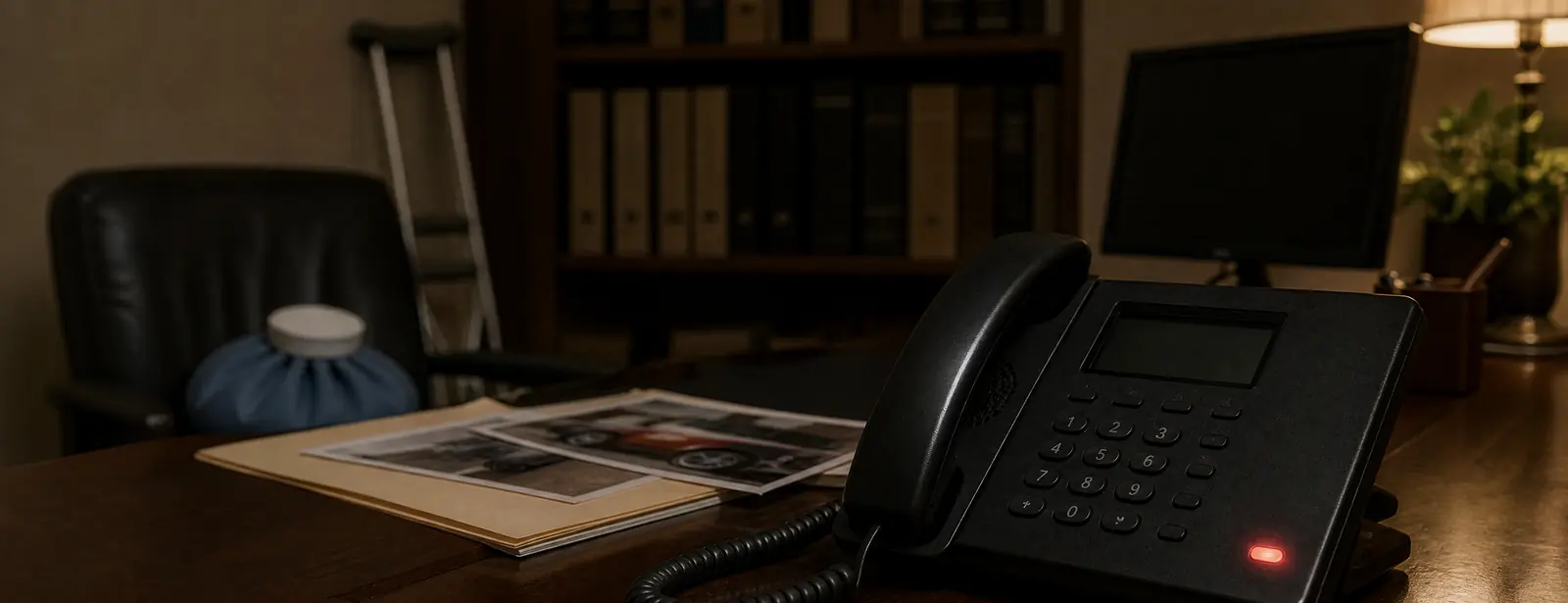
It’s 6:40 on a Thursday evening. The office closed at six, and both attorneys are still in a deposition that was supposed to end at four.
A woman who was rear-ended yesterday is at her kitchen table with an ice pack and a voicemail from the other driver’s insurance company. The adjuster has called twice and wants a recorded statement “to move things along.” She wants to talk to a lawyer before she calls back, and the first firm that answers is the one she’ll ask.
How the call goes
-
Your firm’s name, and the 911 rule
It names the firm, says it’s an AI and reads your legal advice line. If the accident just happened and someone needs help, the caller hears your 911 line before anything else.
The AI says: “Haddad and Pruitt Injury Law, this is AI Receptionist, the firm’s AI assistant. I can’t give legal advice. What happened?”
-
When, and what kind of accident
A crash, a fall, a dog bite, a work injury, and the date as the caller says it, with no comment on how long ago that was.
The AI says: “When did the accident happen?”
-
Medical care, yes or no
Whether the caller got medical care, and where: an emergency room, urgent care, their own doctor. No symptoms, no diagnosis.
The AI says: “Did you get any medical care after the accident?”
-
The other side, and any insurer
The other driver’s or property owner’s name, for your conflict check. Then whether an insurer has called, asked for a statement or offered money, and whether the caller already has a lawyer.
The AI says: “Has any insurance company contacted you about it?”
-
Contact, and the hand-off
Name, number, safe to leave a message, best time. Then your rules decide: attorney alerted, consultation booked, or a request for your team. Which questions come first, and why, is on the legal intake script.
The AI says: “Thanks. I’m alerting an attorney now. That doesn’t mean the firm has taken your case.”

What counts as urgent
For a personal injury firm, these are the rules we start from. Your rules replace them.
| Situation | What happens |
|---|---|
| The accident just happened and someone needs help | Told to hang up and call 911; your urgent attorney is alerted afterward |
| The caller is in the hospital, or the accident was in the last few days | Urgent by your rule: attorney alerted with the details |
| An insurer wants a recorded statement, or has offered a settlement | Marked urgent; attorney alerted. The AI doesn’t say whether to give one |
| The caller says the accident was a long time ago | Flagged for review with the date; it never says whether it’s too late |
| The caller already has a lawyer for this accident | Message only, marked; no attempt to change their mind |
| Damage to a car only, nobody hurt | Your rule: usually a message or your referral line; a consultation only if you say so |
What it never says on these calls
- What the case is worth, or what a settlement could be.
- Whether to talk to the insurer, give a statement or sign anything.
- Which doctor to see, or anything about treatment.
- “No fee unless we win,” or any fee terms, unless you’ve approved the words.
- That an attorney will come to the hospital or call by a set time.
What you decide
- What counts as urgent: a hospital stay, an insurer pressing for a statement, an accident in the last few days.
- Your screening questions by type of case: whether a police report was filed after a crash, where a fall happened, whether a work injury was reported.
- Older accidents: the age at which a call is flagged for an attorney to review.
- Fee wording: whether it mentions contingency fees at all, and in which words.
- Consultations: booked straight in, or a request your team returns.
We set it up the way you want and you approve the final version.
Why this works for personal injury
Our call protocols come from nearly two decades of running phone reception for small businesses. A personal injury law firm answering service earns its keep in the first minute: the date, the other side’s name and whether the insurer has already called. It asks what matters, so your attorney knows about the recorded statement before the caller calls the adjuster back. It never promises what you don’t: no case values, no “big settlement,” no fee claims your state’s rules don’t allow. The rules are on our method, the setup on how it works, and the whole road from first call to consultation on legal intake.
What it costs
Personal injury answering service pricing here doesn’t punish a long call: a caller who needs five minutes to explain the crash costs the same as one who needs one. Pay As You Go has no monthly fee and charges $0.99 per answered call; firms with a steady flow of new cases usually sit on the 50-Call Plan. Full details on pricing.
Free setup · No contract · Cancel anytime
Your month, by plan
Best fit: 50-Call Plan, $29.00
- Pay As You Go Best fit $29.70
- 50-Call Plan Best fit $29.00
- 100-Call Plan Best fit $49.00
What the month would cost on each plan: the monthly fee plus each call past the ones included.
Questions personal injury attorneys ask
What does a personal injury answering service do?
It’s a personal injury attorney answering service: it picks up the firm’s line during depositions, in court or after closing. Where it differs from a message service is the order: the insurer’s contact and the other driver’s name lead your summary, so your attorney can act before the caller phones the adjuster back.
Will it tell callers not to give a recorded statement?
No. Whether to give a statement is the attorney’s decision; the AI says only that an attorney will review the call. The adjuster’s request goes on the first line of your summary, with an alert by your rule. Approved words for this moment, if you have them, are read as written.
Can it say “no fee unless we win”?
Only in words you approve. How a firm may describe its fees differs by state, so the wording is yours. Without an approved line, it says an attorney will explain fees at the consultation, and moves on. “Free consultation” works the same way: your words or nothing.
Is a virtual receptionist for personal injury lawyers available at night and on weekends?
Ours answers 24/7, including holidays, at the same price per call. An accident call can come at 9 p.m., after the caller has heard from an insurer or come home from urgent care. How night calls are sorted is on the after-hours answering service page.
What about calls from adjusters or medical offices on open cases?
Usually a message, marked for the attorney on that case, and a medical office asking about records or a bill gets the same. It doesn’t confirm to anyone that the firm represents someone unless your rule allows it, and never discusses the case.
The call after the accident, answered
Press Get started and send us your case types and, if you have it, your fee wording. We draft the protocol around them, and you forward your line once you’ve approved each word. For other practice areas, see the attorney answering service page.
Free setup · No contract · Cancel anytime