
Home services
Answering service for contractors: new leads, current jobs and the trade, sorted
Short answer
An answering service for contractors picks up while you’re on a job site with your hands full. Ours is 100% AI: it greets callers as your company, tells them it’s an AI and first works out who’s calling: a new customer, a client whose job is underway, or someone from the trade. New leads get their project details taken and a site visit booked, clients’ questions reach their project manager, and a supplier stuck at the gate is put through to whoever’s on site. You get a summary of every call.
Free setup · No contract · Cancel anytime
Example call: a lumber delivery at a locked gate
Ostrander Build & Remodel · A lumber delivery at a locked gate
- AI
- Ostrander Build & Remodel, this is AI Receptionist, the AI assistant. What can I do for you?
- Caller
- Delivery from Pell Lumber. I’m at the job and nobody’s here.
- AI
- Which address are you at?
- Caller
- 1140 Mulberry. The gate’s locked.
- AI
- I’ll get our site lead, Hector. Your name and a number in case we’re cut off?
- Caller
- Wade Kimball, 555-0134.
- AI
- Thanks, Wade. Putting you through to Hector now.
Summary sent to you
- Delivery at the site
- Pell Lumber at 1140 Mulberry Street, gate locked, nobody on site.
- Caller
- Wade Kimball, Pell Lumber, 555-0134.
- Done
- put through to Hector, your site lead. No gate code given.
When contractor calls come at the wrong time
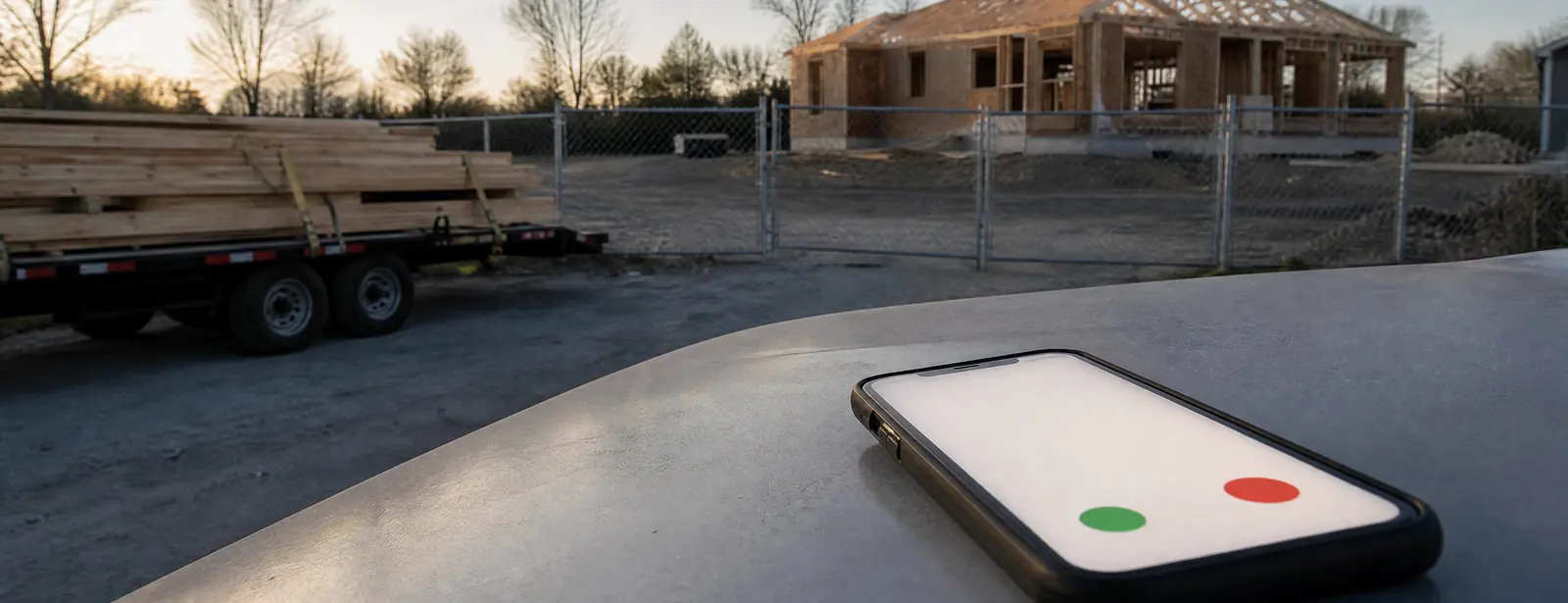
It’s 10:20 on a Wednesday morning in Fort Collins. You’re walking a bathroom gut job with the homeowner, a saw is screaming in the next room, and your phone has rung four times since nine.
One is a new lead for a kitchen remodel who saw your yard sign. One is the lumber yard’s driver at the right address with a locked gate; another, the city inspector moving Friday’s framing inspection. One is a client on another job asking if the crew is coming tomorrow. You can’t step out on the homeowner in front of you, and each of those calls costs you something on voicemail.
How the call goes
-
It picks up as your company
The AI says: “Ostrander Build & Remodel, this is AI Receptionist, the AI assistant. What can I do for you?”
-
If anyone is in danger, that comes first
A gas smell, an exposed live wire or water pouring through a ceiling after demo gets your 911 line if anyone is in danger, then your site lead or on-call person at once.
The AI says: “If anyone is in danger, please hang up and call 911 now.”
-
It sorts the caller with one question
The AI says: “Are you calling about a new project, or a job we’re already working on?”
-
New project: it takes what your estimator needs
What the project is, the address and whether it’s in your area, whether the caller owns the property, and when they want it done. Then it books the site visit or takes the request. That whole call is our contractor estimate request script.
The AI says: “What’s the address of the property, and do you own it?”
-
Current job or the trade: it finds the right person
Which job, and who they need. Clients go to their project manager; deliveries, subs and inspectors to your site lead, by your rules.
The AI says: “Which job address are you calling about?”

What counts as urgent
A contractor’s starting list looks like this. You rewrite it to fit your jobs.
| Situation | What happens |
|---|---|
| Gas smell, live wire or water pouring on an active job | 911 line if anyone is in danger; then your site lead now |
| Driver or sub at the site who can’t get in or find the drop spot | Put through to your site lead |
| Inspector changing a date or waiting at the site | Put through, or a message to the project manager with the new date |
| Client on an active job asking about schedule or changes | Message to their project manager; no new date given |
| New project in your area | Details taken, site visit booked or requested |
| Outside your area, or work you don’t do | Your polite no, with any referral you approve |
| Sales reps and lead sellers | Screened out, or a message if you want them |
What it never says on these calls
- A ballpark, a price per square foot or “what jobs like this usually cost.”
- A start or finish date you haven’t set.
- That a change order is approved, or what it will cost.
- That a permit is approved or an inspection will pass.
- Gate codes, lockbox codes or when a house will be empty.
What you decide
- Who gets which calls: estimator, project manager, site lead, or you, and whether the AI says their names to the caller.
- Your service area, the kinds of jobs you take and the smallest job worth a visit.
- The budget question: asked on new leads, or left for the site visit.
- Site visits: which slots it can book, or whether it only takes the request.
- Your active jobs: the addresses and who runs each one.
- Sales calls: blocked, or kept as messages.
We set it up the way you want and you approve the final version.
Why this works for contractors
Our call protocols come from nearly two decades of running phone reception for small businesses, and a contractor’s phone is three phones in one. It asks what matters: “new project or a job we’re working on?” comes first, because it decides every question after it. It knows when to hand over: a driver at a locked gate needs your site lead in the next minute, and a client asking about a change needs their project manager, not a promise from the receptionist.
Why those two rules come first is on our method. If your crews also do the specialist work, the roofing answering service and the electrician answering service have their own urgent lists; all ten trades are on home services.
What it costs
A two-minute delivery call and a long first conversation about a remodel cost the same: billing is per answered call, never per minute, and a call put through to your site lead counts as one. Pay As You Go has no monthly fee and costs $0.99 per answered call; the 50-Call Plan is $29 a month for 50 calls. See every plan on pricing.
Free setup · No contract · Cancel anytime
Your month, by plan
Best fit: 50-Call Plan, $29.00
- Pay As You Go Best fit $29.70
- 50-Call Plan Best fit $29.00
- 100-Call Plan Best fit $49.00
What the month would cost on each plan: the monthly fee plus each call past the ones included.
Questions contractors ask
What does a construction answering service do that voicemail doesn’t?
It asks. Voicemail gets “call me back” and a number; a construction answering service gets the project, the address, whether the caller owns the property and when they want it done. A contractor phone answering service also puts urgent calls from a job site through while they’re still urgent.
Can an answering service for contractors qualify leads before I drive out?
Yes, with your questions. It asks about the project, the area, ownership, timing and, if you want it asked, the budget, and it tells callers outside your area your polite no. You see whether a lead matches the jobs you take before you spend an afternoon on a site visit. More on lead intake.
Is it a good remodeling answering service?
Remodeling callers often want to talk through ideas before they ask for a visit. The AI listens, writes down what they describe, such as an open kitchen or a second bathroom, and books the consultation. It doesn’t give design advice, guess at costs or say what’s structurally possible. That conversation is yours.
Does it work for construction companies with several crews?
Yes. As an answering service for construction companies, it works from your list of active jobs and who runs each one, so a call about the Mulberry job reaches that site lead and not your estimator. If the person doesn’t answer, it takes a message and alerts the backup you named.
I’m the estimator, the project manager and the crew. What changes for me?
Every call used to mean putting down the saw or losing the lead. A virtual receptionist for contractors takes the new-project call with your questions, puts the driver at the gate through to your cell, and sends the client’s schedule question to you as a message. You finish the cut and read who called and why. On Pay As You Go you pay only for the calls it answers.
Get your hands back
Press “Get started” and send us your service area, your active jobs and who gets which calls. The protocol is written during your free setup, step by step as on how it works, and goes live only after you sign off on it.
Free setup · No contract · Cancel anytime