
Call protocols
Call protocol library: scripts for answering phone calls, by industry
Short answer
A script for answering phone calls tells whoever picks up what to say, what to ask and what to do with each call. Our receptionist is 100% AI, and it works from a fuller version for every business it answers for: a call protocol built for that industry, which also says when to transfer the call, what never to promise and what you receive afterward. Below are a sample script any business can use today and the full protocols we start from for 13 kinds of calls.
Our call protocols come from nearly two decades of running phone reception for small businesses. We publish them because you should be able to read exactly how your calls will be answered before you sign up.
Free setup · No contract · Cancel anytime



The protocols
Each one shows the questions in order, the rules for transferring the call, what the AI never says, an example call and the summary you receive. Eleven are by industry; two, after-hours and Spanish-speaking callers, apply to any business.
-
After-hours triage
“Is anyone in danger right now? If so, please hang up and call 911.”
Any call when you’re closed: urgent now, first thing tomorrow, or a message
-
Plumbing emergency
“Is water still running right now?”
Water that won’t stop, leaks through ceilings, sewage backups
-
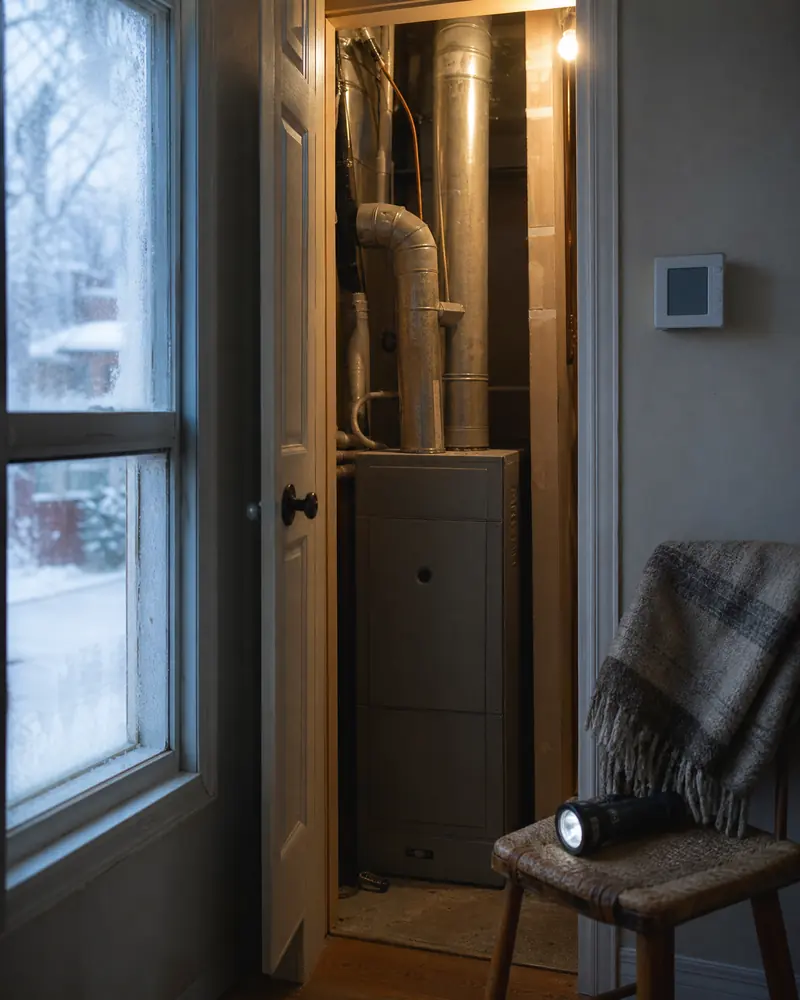
HVAC: no heat or no cooling
“Is the system completely off, or is it running but not heating?”
A system down in extreme weather, especially with someone vulnerable at home
-
Roofing storm damage
“Is water coming into the house right now?”
The rush of calls after a storm: active leaks first, inspections booked
-
Contractor estimate request
“Tell me a little about the project.”
A new job: project, address, timeline and a site visit
-
Property maintenance
“If anyone is in danger or you smell gas, please leave and call 911 now.”
A tenant’s repair request, sorted into emergency, urgent or routine
-
Real estate showing
“Which property are you calling about?”
A buyer calling about a listing who wants to see it
-
Salon booking
“Would you like to book, change or cancel an appointment?”
Service, stylist and an appointment confirmed once it’s saved
-
Legal intake
“Are you already a client of the firm, or is this your first time calling us?”
A prospective client’s first call to a law firm, without legal advice
-
Insurance claim
“First, is anyone hurt or in danger right now?”
A client reporting a loss to their agency
-
Funeral home first call
“Brennan and Grant Funeral Home. This is the AI assistant. How can I help you?”
A family calling after a death, put through to the director
-
Spanish-speaking caller
“Cruz Auto Repair, this is AI Receptionist, the AI assistant. ¿En qué le puedo ayudar?”
Any of the above, in Spanish, on the same line
Every protocol is a starting point that we adapt to your business, and you approve every line before it answers a call. Pick yours and get started, or read on for a script you can use today.
A sample script for answering phone calls
If you just need a phone answering script for yourself or your receptionist, this one works for most small businesses. Replace the words in capitals with your own.
1. Greeting
"Thank you for calling BUSINESS NAME, this is YOUR NAME. How can I help you?"
When our AI answers, that line becomes: "Thank you for calling BUSINESS NAME, this is AI Receptionist, the company’s AI assistant. How can I help you?" It always says it’s an AI.
2. Name, number and reason
"Can I get your name and the best number to reach you, in case we get cut off?"
"And what can we help you with today?"
3. The questions that sort the call
Two or three questions that tell you what kind of call it is. A plumber asks "Is water still running?" A dentist asks "Are you a current patient?" A contractor asks "What’s the address of the property?"
4. One of three next steps
- Transfer: "Let me put you through to SOMEONE."
- Booking: once it’s in the calendar, "You’re booked for DAY at TIME."
- Message: "I’ll pass this to SOMEONE, who will call you back."
5. Close
"Is there anything else I can help with? Thanks for calling BUSINESS NAME."
The three lines people get wrong
- Before a transfer: "May I tell SOMEONE who’s calling and what it’s about? One moment."
- Taking a message: "I’ll make sure SOMEONE gets this today. Is this the best number to call you back on?"
- When asked for a price: "I can’t quote that over the phone, but SOMEONE will confirm the price when they call you."
The last one is the rule behind every protocol here: never promise what the owner hasn’t approved. This receptionist answering phone calls script covers an ordinary call. Which calls are urgent, who gets woken up and what never to say are what the protocols above add.
Script, auto attendant or protocol?
Three things people call a phone script, and they’re not the same.
- An auto attendant script is the recording on a phone menu. Two typical examples: "Thank you for calling. For sales, press 1. For service, press 2." and "You’ve reached BUSINESS NAME. Our office is closed. For emergencies, press 1; to leave a message, press 2." It routes callers by keypress and doesn’t talk with them. If that’s what you’re replacing, see the auto attendant alternative.
- A phone answering script is what a person says: a greeting, a few questions, a close, like the sample above.
- A call protocol is a script plus the rules: the questions in the right order for your industry, when to transfer the call, what counts as urgent, what never to say and what you receive after every call. It’s what our AI receptionist follows.
What every protocol has in common
Whatever the industry, five rules sit underneath every protocol. The reasoning behind each one is on our method.
- It asks what matters, in the order that gets to the answer fastest.
- It knows when to hand over, to you, your team or a message.
- It never promises what you don’t: no prices, dates or advice you haven’t approved.
- It escalates real emergencies, and puts 911 first when someone is in danger.
- You see every call: a summary in your inbox, with the recording and transcript in your dashboard.
We start from the protocol for your industry, adapt it to your hours, team, services and wording, and you approve every line before it answers a call. Setup is free, and the three setup steps are on how it works.
Questions about call scripts
What should a script for answering phone calls include?
The five steps above: a greeting, the caller’s name and number, the two or three questions that sort the call, one of three next steps, and a close. Add the three lines people get wrong and you have a solid script for a person. What a full protocol adds on top, and why, is on our method.
Can I customize the call script for my business?
Yes. Every protocol here is a starting point. We change the questions, the order, the transfer rules and the wording to fit how you work, and you approve the final version before your calls are forwarded. Nothing goes live until you’ve read it.
How do I update my answering service call script?
Tell us what you want changed, such as a new question, a new person on call or new hours, and we update your protocol. Every call is recorded and summarized, so when a call shows a question that’s missing, it’s easy to spot and add.
Do live answering services use custom call scripts too?
Most do. A live answering service with people on shift works from a telephone answering script you agree with them. The difference here is that the AI follows your protocol the same way on every call, at any hour, including the questions and limits you set.
Is the AI receptionist reading a script word for word?
It follows your protocol: the questions, their order and the lines you approve, such as safety lines or your cancellation policy, which it reads exactly. In between, it talks naturally, answers in English or Spanish and responds to what the caller says.
Put a protocol on your phone line
You’ve already read how it answers. Pick the protocol closest to your business, tell us how you work, and we build your version as part of your free setup; nothing goes live until you’ve approved every line. There’s no monthly fee on Pay As You Go, $0.99 per answered call; all plans are on pricing.
Free setup · No contract · Cancel anytime